
Your product looks incredible in person. The quality is obvious. The design matters. You’re proud of what you’ve built. Then you take a photo on your phone and post it online. And it disappears into the void.
No engagement. No clicks. No sales.
So you try again. Better lighting. New angle. Still nothing.
You’re not alone in this. I’ve watched so many brands with genuinely good products fail to sell them because their photos made the products look like they didn’t matter. A leather bag that looked like a discount knockoff in the photo but felt premium in hand. A piece of jewelry that gleamed in person but looked flat and dead online. Coffee that smelled like heaven but looked brown and generic on every platform.
Here’s the truth nobody tells you: Your product isn’t losing to better competitors. It’s losing to better photos of competitors.
In Bangalore, where every e-commerce startup and established brand is fighting for the same scroll space, product photography isn’t a nice-to-have. It’s the difference between someone clicking through and someone scrolling past. It’s the reason someone adds to cart or closes the app. It’s the invisible salesperson who either works for you or against you.
This guide is about what that actually means. Not camera tips. Not DIY hacks. But the real decisions that matter when your product’s life depends on its online appearance.
Why Your Phone Camera Isn’t Enough (And That’s Okay)
I’m not going to sit here and tell you that your phone camera is useless. Phones are incredible. The technology is actually insane. You can take a photo that’s technically sharp, well-lit, and detailed on almost any phone made in the last three years.
The problem isn’t technical. It’s psychological.
When someone takes a photo on their phone, they’re taking a record. A documentation. Here is the thing: proof it exists. But when a professional photographer takes a product photo, they’re making an argument. This thing is valuable. This thing matters. This thing is worth the click.
These are different jobs. Both result in images. But only one results in sales.
Here’s what a phone camera actually struggles with: depth of field. That blurry background that makes your product pop, with the background fading. That’s what makes a photo feel professional. Your phone tries, but it’s not quite there. Your product sits on the background instead of standing apart from it. It doesn’t feel special. It just feels documented.
Phone cameras also struggle with color accuracy. What looks gold on your screen might look yellow in reality. What feels like a deep blue might look black. For jewelry, fashion, food, anything where color matters, this is a problem. Your customer receives something that looks different from the photo. And now they’re thinking you either lied or you don’t know what your product looks like.
Plus there’s the consistency issue. One photo looks one way. The next photo looks completely different. Different lighting. Different angle. Different white balance. It all feels chaotic and random, not curated and intentional.
A real product photographer controls all of this. They’re not documenting. They’re designing. Every photo looks like it belongs to the same brand.
The Platforms Have Different Requirements (And Most Brands Get It Wrong)
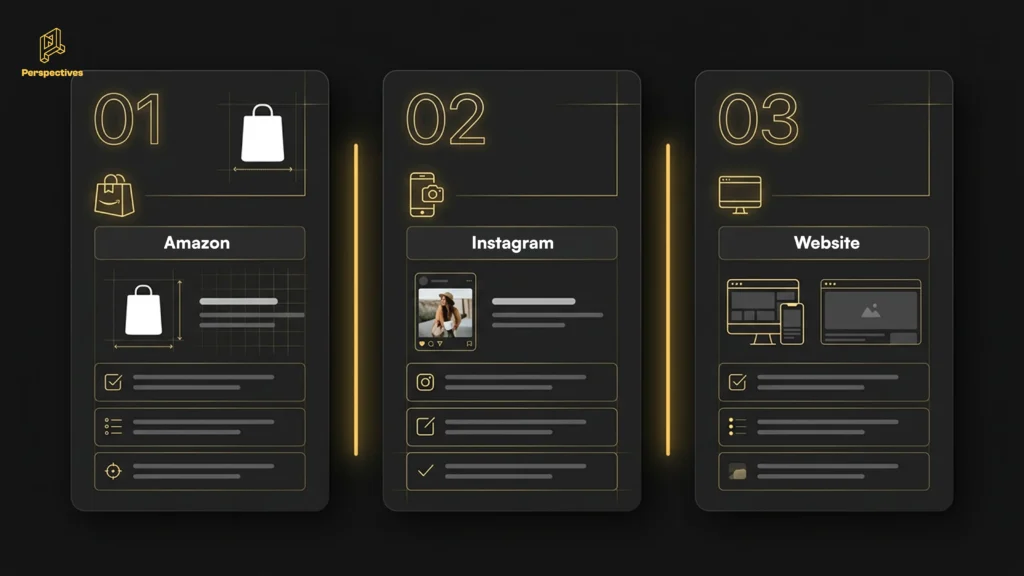
Here’s something nobody explains until you’re already frustrated: Amazon doesn’t want the same photo as Instagram. And Instagram doesn’t want the same photo as your website. Each platform has different specs, different image dimensions, different viewer expectations.
You know what most brands do? They take one photo and crop it a hundred different ways to fit everywhere. Then wonder why their Instagram looks cramped, and their Amazon listing looks zoomed out and weird.
Amazon. Amazon’s algorithm actually cares about image quality. It favors images with white backgrounds, clear product shots, and multiple angles. It’s not being artsy. It’s being practical. People on Amazon are shopping. They want to see the product clearly so they can make a decision. Your lifestyle photo featuring someone using your bag is a nice way to tell a story on Instagram. It’s terrible for Amazon. You need a clean, clear, no-distractions shot on white.
Instagram. Instagram wants emotion. Context. Why does this product matter? What does using it feel like? A lifestyle photo of your product in someone’s real life converts way better on Instagram than a sterile studio shot. But it has to be the right dimensions for the feed, the right aspect ratio for stories, the right composition for the carousel.
Your website. Your website is your stage. You can go wild here. Hero image that tells a story. Detail shots. Lifestyle. Multiple angles. But they all need to work together visually. They need to feel like they’re telling one story, not random photos you found somewhere.
Most brands take product photos that are “okay for everything,” which means they’re optimized for nothing. They’re a compromise. And compromises online don’t convert.
What Product Photographers Actually Do That Your Camera Doesn’t
When you hire a product photographer, you’re not paying for a camera. You’re paying for expertise, equipment, and workflow that your phone (and honestly, most DIY photographers) can’t replicate.
Here’s what that actually means:
Lighting rigs. Professional product photographers don’t rely on natural light or one overhead bulb. They build light environments. Softboxes that diffuse light. Reflectors that bounce light. Key lights, fill lights, backlights. The light is orchestrated. Your product isn’t just lit, it’s sculpted with light. And that makes it look three-dimensional, valuable, worth the purchase.
Lenses. Different products need different lenses. A macro lens for jewelry. A wider lens for furniture. A telephoto for getting a specific angle. Photographers have the right lens for the job. Your phone has whatever lens is built in.
Backgrounds and surfaces. Seems simple. But the background matters. Is it pure white? Textured? Complementary to the product color? A professional photographer has options. They’re not just shooting against a wall. They’re choosing a background that makes your product look even better.
Color grading. After the shoot, real photographers color-grade their images. They adjust saturation, contrast, white balance, and shadows. This is where good photos become premium photos. A phone’s default color might be fine. But it’s never quite right. It’s never the brand color you actually want to represent.
Angle and composition. A photographer isn’t just shooting at eye level like you would with a phone. They’re thinking about the angle that makes your product most appealing. That might be from above. That might be slightly to the side. That might be close up on a detail. Every angle is a choice, not a default.
The Lighting Problem Nobody Understands Until It’s Too Late
You want to know what kills product photography more than anything else? Bad lighting. And the worst part is, you don’t realize it until you’re already comparing your photos to your competitors.
Your competitor’s leather bag looks like leather. Yours looks plastic. Same material. Same quality. Different lighting.
Here’s why lighting matters so much for product photography: it tells a story about value. Harsh, direct light makes things look cheap and exposed. Soft, diffused light makes things look premium and desirable. It’s not magic. It’s psychology. And it works.
Most small brands shoot in whatever light is available. Maybe it’s a sunny day by the window. Maybe it’s overhead fluorescent bulbs in the office. Maybe it’s a desk lamp. The light is harsh or flat or yellow-tinted. Your product doesn’t look bad. It just looks underlit. Unfinished. Like you threw it together.
Professional product photography uses specific lighting setups:
- Soft light for detail. When you want people to see texture, quality, craftsmanship, you use soft, diffused light. A softbox. A ring light. Light that’s bounced off a reflector. It shows every good detail of your product.
- Backlighting for shape. When you want people to see the shape and silhouette of your product, backlighting creates a sense of separation. The product glows slightly. It feels distinct. It pops off the background.
- Highlighting for emphasis. If your product has a specific feature that matters (a special zipper, a unique construction detail, a premium material), lighting can draw the eye to it. This is where the photographer’s expertise becomes obvious.
Most brands don’t think about this. They think about it after the shoot, when it’s too late. A photographer thinks about it before the first frame is shot.
When Lifestyle Photography Actually Sells Better Than Product Photography
Here’s the weird part: sometimes a photo of someone using your product sells better than a photo of the product itself.
This breaks the “clean product shot” rule I just talked about. But it’s true. And it’s worth understanding why.
A lifestyle photo creates context. It answers the question “Why do I need this?” A pure product shot answers “What does this look like?” These are different sales conversations.
If you sell a water bottle, a clean product photo shows it. Nice. Clean. Transparent. You can see the design. But a lifestyle photo shows someone hiking with your water bottle, looking happy and confident. Suddenly you’re not selling a bottle. You’re selling the experience of being the kind of person who owns this bottle.
Here’s when lifestyle works:
- It works for fashion. A photo of a jacket on a model in a real scenario sells better than a jacket on a hanger.
- It works for coffee. A photo of someone enjoying your coffee as part of their morning routine sells better than a photo of the bag.
- It works for tools. A photo of someone using your tool effectively sells better than the tool sitting on a table.
- It works for anything aspirational. Anything where the person buying doesn’t just want the product; they want the feeling it gives.
It doesn’t work for everything. For jewelry, you probably want both. Detail shots that show craftsmanship, and lifestyle shots that show the feeling of wearing it. For commodities where people just want to see the specs, lifestyle is wasted. For anything where trust depends on seeing the exact product you’re getting, lifestyle alone won’t cut it.
The brands winning online usually do both. A primary hero image that’s lifestyle (emotion, story). Then a carousel of product shots that show the actual details. Amazon needs the product shots. Instagram needs the lifestyle. Your website can tell the whole story.
The Real Cost of Bad Product Photography
You think bad product photography costs you nothing because you didn’t pay for it. You shot it yourself or your intern did. Free, right?
Wrong. Bad product photography costs you everything. And you probably don’t even know how much.
Let’s say you sell a product for 2,000 rupees. Your conversion rate with bad photos is 1.5 percent. That means for every 100 people who see the product, one person buys it. For every 1000 clicks, 15 sales. In a month, if you get 5,000 clicks, you make 75,000 rupees.
Now let’s say you invest in professional product photography. Your conversion rate jumps to 3.5 percent. More than double. For every 100 people who see it, three or four buy. Same 5,000 clicks. Now you make 175,000 rupees.
The photography cost you 30,000 rupees. In one month, you made back that investment and then some. And the photos work for years.
But most brands don’t think about it this way. They think “photography costs money” and stop there. They don’t calculate the cost of the sales that don’t happen because the photo didn’t convert.
Bad product photography also costs you trust. Someone clicks your product. They see a photo that looks unprofessional, poorly lit, or inconsistent with what you promised. The first reaction isn’t “oh, that’s fine, I’ll still buy.” It’s “this brand is not serious, I’m going somewhere else.”
You also lose to returns and bad reviews. Someone buys based on your photo. The product arrives. It looks different from the photo because the photo was bad. They return it. Or worse, they leave a bad review saying the product doesn’t look like the photo.
The true cost of bad product photography isn’t the photography itself. It’s the sales you lost, the returns you handled, the customer service tickets you answered, the trust you broke. It’s not zero. It’s expensive.
Why Bangalore Brands Choose Perspectives for Product Photography
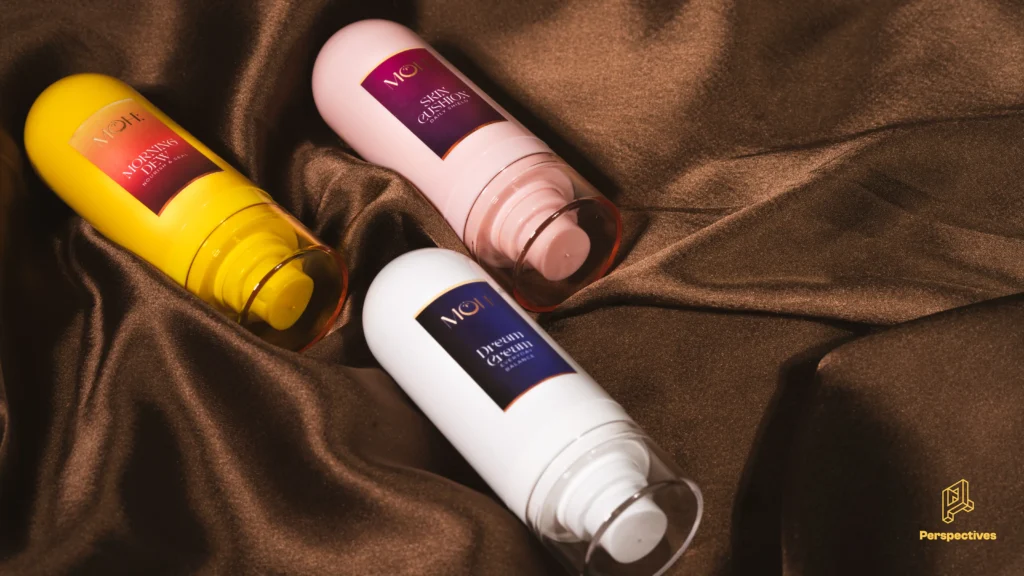
Here’s the thing about product photography in Bangalore: you can find photographers everywhere. Any photographer can point a camera at your product. But not every photographer understands what makes a product photo actually sell.
Perspectives doesn’t just shoot products. We photograph them strategically. We start by understanding what you sell and who buys it. Is it premium? Lifestyle? Practical? The approach to lighting, composition, and styling changes based on the actual sales strategy.
We handle the full scope: product studio work, lifestyle shoots, packaging detail shots, everything that goes into a complete product visual system. You don’t piece together different photographers for different phases. We build the whole visual identity.
Here’s what that means practically. When we photograph your product for Amazon, we know the Amazon algorithm favors certain image types. We build those. When we shoot lifestyle content for Instagram, we know what converts. We build that too. When we create shots for your website, we think about the story you’re telling across all platforms. It’s coordinated. It’s intentional. It’s not random.
We’ve worked with jewelry brands, fashion labels, F&B companies, beauty brands, and tech startups. Brands that realized their products were too good to look mediocre online. They invested in professional photography because the ROI was obvious once we showed them the data.
We also understand the operational reality of e-commerce in Bangalore. We know SKU volumes. We know catalog shoots need to move fast without sacrificing quality. We know how to build a workflow that delivers hundreds of product photos in a matter of days, not weeks. We have the infrastructure. We have the team. We have the process.
The real reason Bangalore brands trust us is simple: we treat product photography like it matters. Because it does.
FAQs
What’s the real difference between DIY product photography and professional photography?
DIY gets you a photo of your product. Professional gets you a photo that sells your product. Technical quality matters, but strategy matters more. A professional photographer knows how to make your product look premium, trustworthy, and worth buying.
How much should we expect to pay for product photography in Bangalore?
It depends on product type, volume, and complexity. A single studio shoot (basic products) runs 10,000 to 30,000 rupees. A lifestyle shoot with models costs more. A full catalog shoot with hundreds of SKUs costs significantly more but breaks down to a reasonable per-product cost. Get multiple quotes and compare the quality, not just the price.
Do we really need both product photos and lifestyle photos?
It depends on what you sell. For premium products, aspirational categories, or anything lifestyle-driven, yes. For commodities where people just need to see the specs, product photos alone might be enough. But most brands benefit from both.
How often should we update our product photography?
If your product doesn’t change, your photos don’t need to change. But if you’re launching new colors, new variations, seasonal products, or refreshing your brand, new photography is worthwhile. Also, if your competitor’s photos are better than yours, that’s a sign.
Can we use the same product photos across Amazon, Instagram, and our website?
You can, but you shouldn’t optimize for it. Each platform has different specs and viewer expectations. Amazon wants clean product shots on a white background. Instagram wants lifestyle context. Your website can tell the full story. Shooting platform-specific content converts better than using the same photo across platforms.
What should we look for when hiring a product photographer?
Look at their portfolio. Is the quality consistent? Do the products look premium and desirable? Can they explain the strategy behind the photos, not just the technical setup? Do they have experience with your product category? Have they worked with e-commerce brands? Can they deliver the volume and timeline you need?
Conclusion
Product photography isn’t an art project. It’s not about making your product look artsy. It’s about making your product look the way it actually deserves to look. Professional. Intentional. Worth buying.
If your product is good, your photos should reflect that. If your photos don’t match the quality of your product, you’re leaving money on the table. Literally. Measurable money. Conversions that didn’t happen because the photo didn’t convince someone to click.
The choice isn’t between professional photography and DIY photography. The choice is between the conversion rate you have and the conversion rate you could have. Between the customers who buy despite your photos and those who would buy because of them.
That’s what product photography actually is.
Key Takeaways
- Bad product photography costs you sales, trust, and credibility. The real cost is the conversions that don’t happen.
- Phone cameras are good but optimized for documentation, not sales. Professional photography is optimized for selling.
- Different platforms (Amazon, Instagram, your website) need different photo approaches. One photo doesn’t fit all.
- Lighting is the invisible force that makes a product look premium or cheap. Soft, sculpted light always wins.
- Product photos show what the product looks like. Lifestyle photos show why someone needs it. Best brands do both.
- Color accuracy matters more than people realize. Your product on the screen should match your product in hand.
- Composition and angle are choices, not accidents. Every good product photo is intentional about what it shows.
- Professional product photography has ROI. Track your conversion rate before and after, and you’ll see the math.
- Consistency across photos matters. If each product looks like it’s from a different brand, people distrust the whole collection.
- Your product deserves photography that matches its quality. If it doesn’t have it, your customers will find someone who does.
Your product is worth more than the photo you gave it.
Book a product photography session with Perspectives and let’s show your product the way it actually deserves to look. We handle everything: studio setup, styling, lighting, platform-specific optimization. One call. One conversation. Complete product visual system.
Let’s make your product look as good as it actually is.