
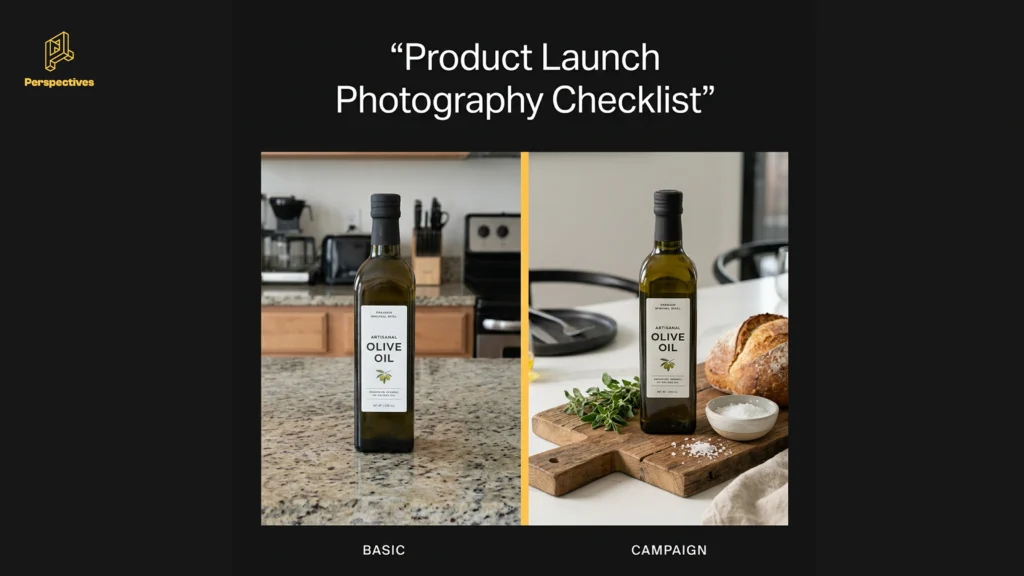
A D2C skincare brand spent four months developing a new serum, sourcing ingredients, testing formulas, and designing packaging that looked genuinely premium on the shelf. Launch day arrived, and the only visual ready was a single flat-lay shot taken on a marble countertop borrowed from someone’s kitchen. The product was excellent. The product launch photography wasn’t, and the difference showed up immediately in how the launch performed online.
Quick answer, before the details:
- Product launch photography needs to be planned weeks before launch day, not scrambled together at the last minute.
- A complete shoot includes clean product shots, lifestyle context shots, and often a short product launch video, all captured in a single session.
- Campaign photography for a launch should be built around every platform it’ll appear on: website, Amazon, Instagram, and paid ads.
- D2C and retail brands lose momentum fast when launch visuals aren’t ready on day one.
- Planning product launch photography around a fixed checklist prevents the last-minute scramble entirely.
In this guide:
- Why Does Product Launch Photography Need Its Own Checklist?
- What Should Be On Your Product Launch Photography Checklist?
- Do You Need a Product Launch Video Alongside Stills?
- How Should Campaign Photography Differ Across Platforms?
- When Should D2C and Retail Brands Book Their Launch Shoot?
- What Mistakes Sink a Product Launch Photography Shoot?
- How Perspectives Handles Product Launch Photography for Brands
- FAQs
- Key Takeaways
Why Does Product Launch Photography Need Its Own Checklist?
Everyday product photography and product launch photography aren’t the same job, even though they look similar on the surface. A launch has a fixed date, multiple platforms to feed at once, and zero room for a reshoot once the countdown hits zero.
That’s exactly why product launch photography needs its own checklist instead of being treated like routine product photography. A regular product shoot can be redone next month if something’s missing. A launch shoot has one shot at making the first impression, on the exact day customers are paying attention, checking the website, scrolling the campaign, or landing on the Amazon listing for the first time.
Most D2C and retail brands underestimate how many assets a single launch actually needs: hero shots, lifestyle shots, platform-specific crops, and often a short product launch video for social. Perspectives’ product and lifestyle photography work is structured around exactly this kind of launch-specific planning, not a generic one-size shoot.
What Should Be On Your Product Launch Photography Checklist?
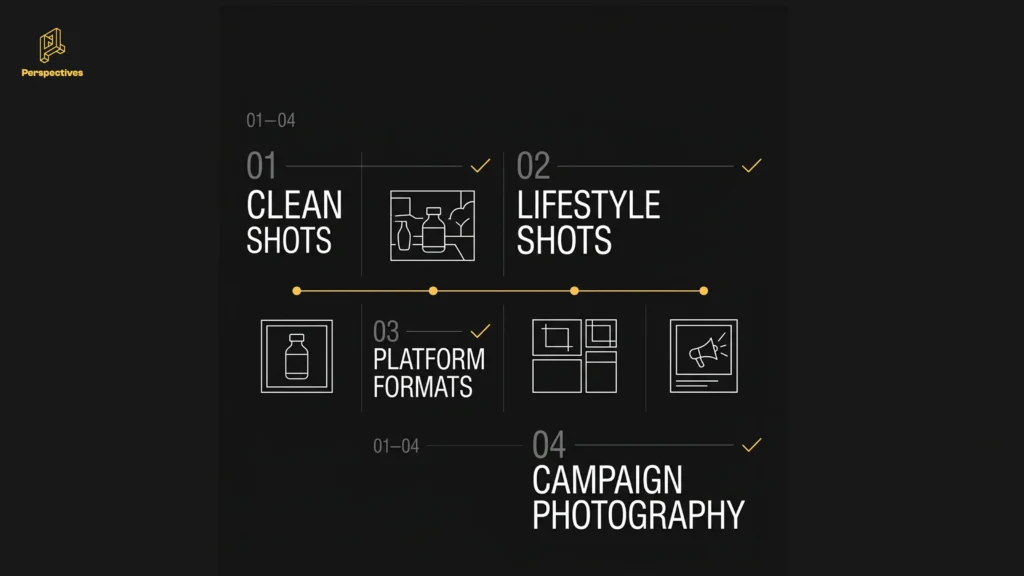
A solid product launch photography checklist covers four categories: clean product shots, lifestyle shots, platform-specific formats, and supporting campaign photography for ads.
Clean product shots come first: white or neutral background, even lighting, multiple angles. These are non-negotiable for the website product page and Amazon or marketplace listings, where clarity matters more than mood. Lifestyle shots come next: the product in real use, styled in context, built to stop the scroll on Instagram rather than just document the item.
Platform-specific formats round out the list: square crops for feed posts, vertical formats for stories and reels, wide banners for the website hero. Skipping this step is one of the most common reasons product launch photography looks great on one platform and gets awkwardly cropped everywhere else. Perspectives’ branding and creative direction guidance often helps brands map this checklist against their actual launch channels before the shoot.
Do You Need a Product Launch Video Alongside Stills?
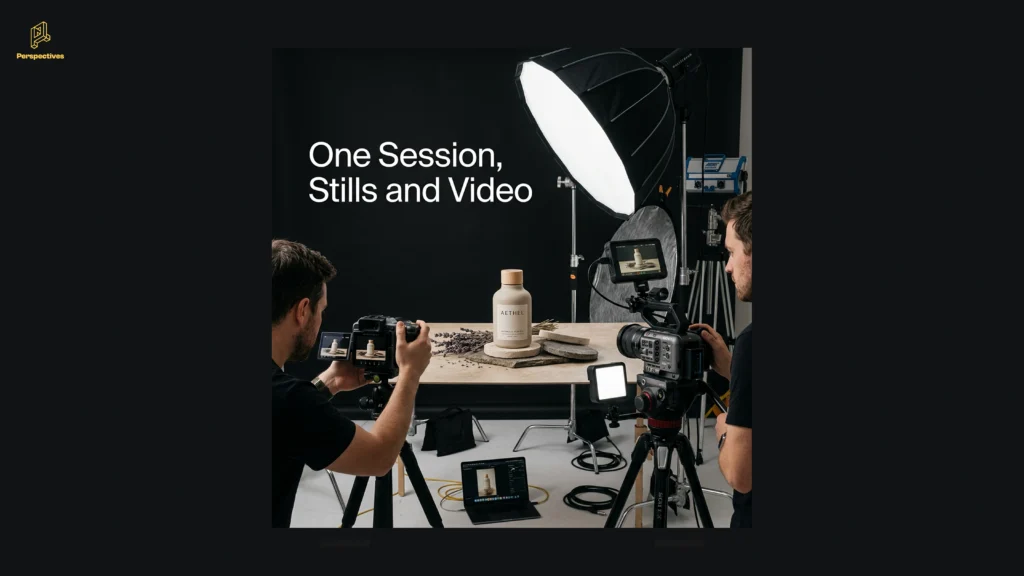
In most cases, yes. A product launch video does something stills can’t: it shows the product in motion, texture, function, unboxing, and that motion consistently drives more engagement across Instagram and other social platforms during a launch window.
The good news is a product launch video doesn’t need to be a separate production. When planned alongside product launch photography in the same session, the crew, lighting, and styling are already set up, making a short video an efficient addition rather than a whole new shoot. A 15 to 30-second product launch video covering unboxing, texture, or in-use moments is usually enough to fuel the first week of launch content.
Brands that skip the product launch video entirely often find their launch content feels flat compared to competitors running even a simple, well-shot video alongside their stills. Perspectives’ videography services are built to slot directly into a product photography session for exactly this reason.
How Should Campaign Photography Differ Across Platforms?
Campaign photography for a launch isn’t one-size-fits-all, and treating it that way is a common mistake. Amazon and marketplace listings require clean, compliant product shots that follow strict platform image guidelines. Instagram and social platforms reward lifestyle-forward campaign photography with more personality and context. The website often needs a mix of both: a clean hero shot up front and lifestyle imagery further down the product page.
Paid ad campaigns have their own demands too. Campaign photography for ads usually needs to work in smaller formats, be legible at a glance on a phone screen, and compete against a dozen other posts in the feed. This means bolder framing, clearer focal points, and less reliance on fine detail than a website product shot would need.
Planning product launch photography with this platform breakdown in mind from day one, rather than shooting generically and hoping the images adapt, is what separates a launch that looks cohesive everywhere from one that looks slightly off depending on where a customer sees it.
When Should D2C and Retail Brands Book Their Launch Shoot?
Timing matters more for product launch photography than almost any other kind of shoot. Most brands should book their session two to three weeks before launch day, giving enough time to shoot, review, retouch, and format everything across all required platforms.
Waiting until the week of launch is the single biggest risk factor. There’s no buffer for a reshoot if lighting doesn’t work, if a sample arrives late, or if a formatting issue only becomes obvious once images are uploaded to the website or ad platform. Building in a buffer also gives the marketing team time to actually plan around the campaign photography, rather than uploading assets the moment they land.
For festive-season launches, a common pattern for Indian D2C brands, booking even earlier is worth it, since studios and production schedules fill up fast around Diwali and other peak shopping windows. Perspectives’ event and campaign coverage planning follows the same logic, building in enough lead time so that nothing gets rushed during launch week itself.
What Mistakes Sink a Product Launch Photography Shoot?
The most common mistake is shooting only clean product shots and skipping lifestyle imagery entirely. Clean shots alone rarely convert on social media, where context and story matter more than a plain white background.
The second mistake is treating product launch photography and a product launch video as separate projects instead of planning them together. This usually means paying for two setups instead of one, and often results in the video feeling visually disconnected from the stills.
The third mistake is ignoring platform formatting until after the shoot. Cropping a beautifully composed square image into a vertical story format after the fact rarely looks intentional. Planning formats into the shot list from the start, as part of the original campaign photography brief, avoids this entirely.
How Perspectives Handles Product Launch Photography for Brands
Perspectives works with D2C and retail brands across Bangalore to plan product launch photography as one coordinated session, not a scramble of separate shoots. The process starts with the Listen stage, mapping exactly which platforms the launch needs to feed: website, Amazon, Instagram, paid ads, before a single shot gets planned.
Clean product shots, lifestyle imagery, and a short product launch video typically get captured in the same session, using the same styling and lighting setup, so everything feels visually connected once it goes live. Campaign photography gets formatted for each specific platform as part of the deliverables, not left for the brand to crop and adjust after the fact.
For brands planning a launch around a festive window or a major campaign push, Perspectives typically recommends locking the shoot date early. Full details are available on the product photography services page and the studio’s broader work and background.
FAQs
How many images does a typical product launch photography shoot produce?
It varies by product complexity, but most D2C launches require 15 to 25 final images, including clean shots, lifestyle shots, and platform-specific crops.
Can product launch photography and a product launch video happen in the same session?
Yes, and it’s usually more efficient. Since lighting and styling are already set up for stills, adding a short product launch video to the same session saves both time and cost.
What image specs does Amazon require for product listings?
Requirements vary by category, but Amazon generally requires a pure white background for the main product image, with specific minimum resolution standards; details are available directly on Amazon Seller Central’s image guidelines.
How far in advance should D2C brands book campaign photography for a launch?
Two to three weeks minimum, with more lead time recommended around festive seasons when studio and production schedules fill up quickly.
Does every product need a product launch video, or just some categories?
Most product categories benefit from at least a short video, since motion tends to perform better on social platforms than stills alone, particularly for beauty, fashion, and lifestyle products.
Conclusion
The skincare brand from the opening eventually reshot everything: a proper set of clean shots, lifestyle imagery, and a short product launch video, but not until three weeks after launch, once the initial momentum had already faded. Product launch photography isn’t a nice extra. It’s the checklist item that decides whether four months of product development gets the first impression it deserves.
Key Takeaways
- Product launch photography needs its own checklist, separate from routine product photography.
- A complete launch shoot covers clean shots, lifestyle shots, and platform-specific formats.
- A product launch video shot alongside stills is more efficient than a separate production.
- Campaign photography should be planned differently for Amazon, Instagram, website, and paid ads.
- Booking two to three weeks before launch day leaves room for reshoots and formatting.
- Festive-season launches need even earlier booking due to studio demand.
- Skipping lifestyle shots in favor of clean shots alone weakens social performance.
- Planning stills and video together avoids visually disconnected launch content.
- Formatting for each platform from the start avoids awkward last-minute crops.
Ready to plan your launch visuals? Book a call with Perspectives and let’s find the right angle together.