
Your startup can have a brilliant product, a sharp pitch, and a team investors want to back. But the moment someone lands on your website, opens your pitch deck, or searches for your founder on LinkedIn, they are not seeing any of that yet. They are seeing the image you chose to represent it. That first visual impression can either reinforce the credibility you have worked hard to build or make a promising company feel far less established than it actually is. This is where brand photography stops being a cosmetic detail and starts becoming a serious part of your startup’s brand presence.
And startups rarely get just one moment to make that impression. A funding announcement can suddenly put your founder in front of the press. A new investor may open the pitch deck. A potential hire may check the leadership team on LinkedIn. A customer may visit the website before speaking to anyone on your team. When those moments arrive, scrambling for a usable headshot or piecing together mismatched phone photos is not a brand strategy. It is a missed opportunity.
The answer is not to fill your hard drive with hundreds of pretty pictures. It is to plan brand photography around the places your startup actually needs to show up. A well-executed brand photoshoot can create founder portraits for decks and press, team images that show the people behind the company, workspace and product visuals for the website, and flexible images for LinkedIn and future campaigns. One intentional session can build a visual library that keeps working long after the camera is packed away.
Quick answer, before the details:
- Brand photography for a startup covers three core needs: website visuals, pitch deck imagery, and a founder photoshoot for LinkedIn and press.
- A single company photoshoot, planned well, can cover all three at once, rather than three separate scrambles later.
- Founder photoshoot images should work in both a formal deck and a casual LinkedIn post, so shoot a mix of styles in one session.
- Product and team shots from a brand photoshoot outlast a single funding round and get reused for a year or more.
- Skipping this until “later” almost always means using mismatched, inconsistent images right when investor and press attention is highest.
In this guide:
- What Counts as Brand Photography for an Early-Stage Startup?
- Why Does Brand Photography Matter More at the Startup Stage, Not Less?
- What Visuals Does a Startup Website Actually Need?
- What Should a Founder Photoshoot Cover for Decks and LinkedIn?
- What Goes Into a Company Photoshoot Beyond the Founder?
- How Should a Startup Plan Its First Brand Photoshoot?
- How Perspectives Approaches Brand Photography for Startups
- FAQs
- Key Takeaways
What Counts as Brand Photography for an Early-Stage Startup?
Brand photography refers to every image a company uses to represent itself, on its website, in its pitch deck, across LinkedIn, and in press coverage. For a startup, that usually means three things done in one coordinated effort: a founder photoshoot, product or workspace shots, and a small set of team images.
Most founders think of brand photography as a nice-to-have, something to sort out once there’s more budget. But brand photography isn’t decoration. It’s the visual proof that a company is real, operating, and worth trusting with money or a hire. A blurry LinkedIn photo or a stock image on the homepage tells investors and customers the opposite, even if the product itself is excellent.
The mistake most startups make isn’t skipping brand photography entirely. It’s treating it as three separate problems: a founder photoshoot here, a quick product photoshoot there, a company photoshoot before the next funding round, instead of one planned session that covers all three needs at once. Perspectives’ photography services are built around exactly this kind of consolidated planning.
Why Does Brand Photography Matter More at the Startup Stage, Not Less?
It’s tempting to assume brand photography matters more for large, established companies. In reality, the opposite is true. A startup has less brand recognition to fall back on, so every visual touchpoint carries more weight in building trust.
When an investor opens a pitch deck, the founder photoshoot image on the team slide is doing real work. It signals credibility before a single line of the financials is read. When a journalist covers a funding round, the company photoshoot images available in the press kit determine whether the story looks polished or thrown together. When a potential hire checks LinkedIn before an interview, the founder photoshoot image there shapes their first impression of leadership.
This is the gap that most startup advice misses. Brand photography isn’t about looking fancy. It’s risk management for the moments when a company gets the most outside attention, and those moments arrive earlier and faster for startups than founders expect.
What Visuals Does a Startup Website Actually Need?
A startup website doesn’t need dozens of images. It needs the right handful, sourced from good brand photography rather than generic stock libraries.
At minimum: a strong founder or team photo for the About page, workspace or product shots that show the company actually operating, and a few lifestyle-style images if the product is physical or customer-facing. Every one of these should come from the same brand photoshoot so the lighting, tone, and color grading match across the site. Mismatched visuals, one stock photo here, one phone photo there, quietly tell visitors that the company isn’t as put together as its pitch suggests.
This is also where a company photoshoot pays for itself repeatedly. A single half-day session can generate enough usable images to cover the website launch, the next six months of LinkedIn content, and the first press kit, instead of needing three separate shoots for three separate needs. Perspectives structures its product and lifestyle photography work with exactly this kind of reuse in mind.
What Should a Founder Photoshoot Cover for Decks and LinkedIn?
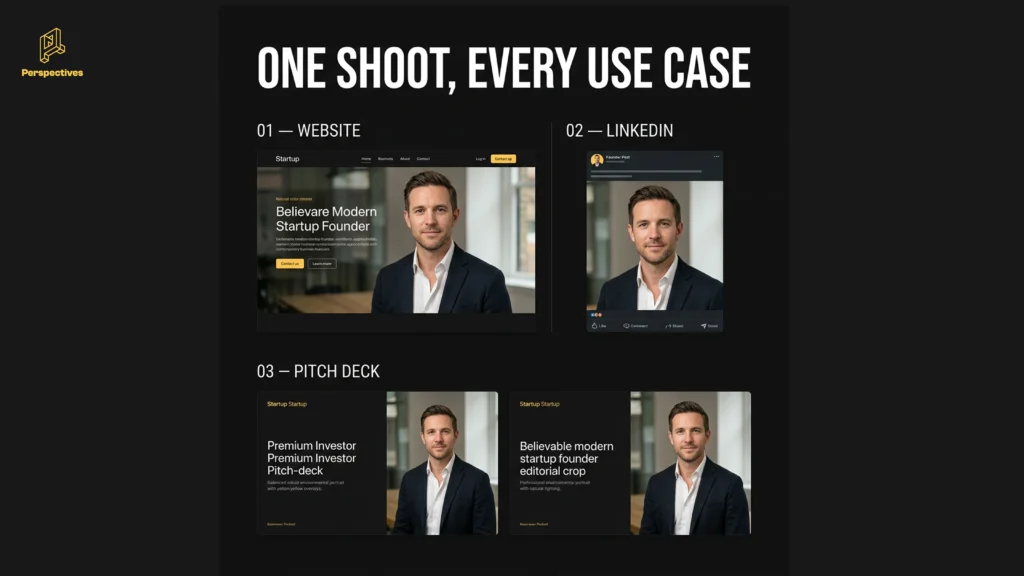
A founder photoshoot has to work harder than most people realize. The same image often needs to sit comfortably in a formal investor deck, a LinkedIn profile, and a press article, three contexts with very different tones.
The fix is shooting a range within one founder photoshoot session: a few formal, direct-to-camera portraits for decks and press, a few warmer, approachable shots for LinkedIn posts and company updates, and ideally one or two environmental shots of the founder in the actual workspace. This range means a founder never has to scramble for “one more usable photo” when a new context comes up, which happens constantly at the startup stage.
Executive and leadership portraits follow similar logic to a founder photoshoot: solid colors, minimal distraction, confident framing. Perspectives covers this exact need through its corporate and leadership portrait sessions, often planned as part of the same company photoshoot as the wider team.
What Goes Into a Company Photoshoot Beyond the Founder?
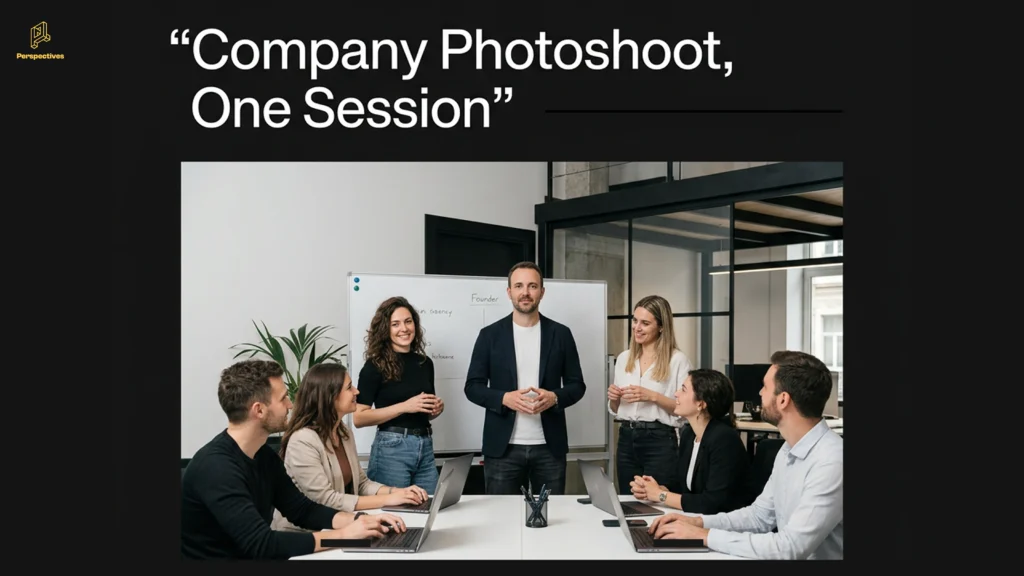
A founder photoshoot alone doesn’t tell the full story of a company. A complete company photoshoot usually includes the wider team, the workspace, and, if relevant, the product in use.
Team photos matter more than most early-stage founders expect. Investors and hires want to see that a company is more than one person’s vision, and a well-shot team image communicates that instantly. Workspace shots do quiet but important work too; they signal that the company has real operations, not just a slide deck and an idea.
If the startup sells a physical product, product shots from the same brand photoshoot round out the set: clean shots for the website, in-context lifestyle shots for social, and detail shots for press or catalog use. All of it, ideally, from one company photoshoot rather than piecing images together from three different sources over six months. Perspectives’ event and milestone coverage also fits into this bank, useful for launch days, office openings, or the first big client win worth documenting.
How Should a Startup Plan Its First Brand Photoshoot?
Planning a brand photoshoot doesn’t need a long creative brief. It requires three decisions in advance: who’s being photographed, how each image will be used, and what the visual tone should be.
List every use case before the shoot: website, deck, LinkedIn, press kit, social content for the next few months. This list should directly shape the shot list for the company photoshoot, so nothing gets missed and nobody has to schedule a second session three weeks before the next funding announcement.
Keep styling simple. Solid colors, minimal clutter in the background, and consistent lighting across the founder photoshoot and any team or product shots. This is also the point where a company decides whether to lean into a specific visual identity, something Perspectives’ branding and creative direction work often supports alongside the photoshoot itself, so images and brand messaging move in the same direction.
How Perspectives Approaches Brand Photography for Startups
Perspectives works with early-stage companies across Bangalore on exactly this kind of consolidated brand photography, one company photoshoot that covers the founder photoshoot, team portraits, workspace, and product needs in a single planned session rather than three rushed ones.
The process starts with the Listen stage: understanding what the website, deck, and LinkedIn presence actually need before a single shot is planned. On set, the team shoots a deliberate range of shots during the founder photoshoot: formal portraits for decks and press, warmer shots for LinkedIn, so founders aren’t left scrambling for a usable image months later.
For startups planning around a funding announcement, product launch, or first big press mention, Perspectives builds the shot list backward from those moments, so the brand photoshoot delivers exactly what’s needed when the attention actually arrives. Full details on the corporate and startup photography offering, as well as the studio’s broader work and background, are available to teams planning their first shoot.
FAQs
When should a startup do its first brand photography session?
Ideally before any major milestone: a funding round, product launch, or press coverage. Waiting until after the moment means using mismatched or outdated images at exactly the time visibility is highest.
Can one company photoshoot cover the website, deck, and LinkedIn at once?
Yes, and it usually should. A well-planned brand photoshoot with a clear shot list covering all three use cases is far more efficient than three separate sessions.
What’s the difference between a founder photoshoot and regular headshots?
A founder photoshoot typically covers a wider range: formal portraits for decks and press, warmer shots for LinkedIn, and sometimes environmental shots in the workspace, all from one session.
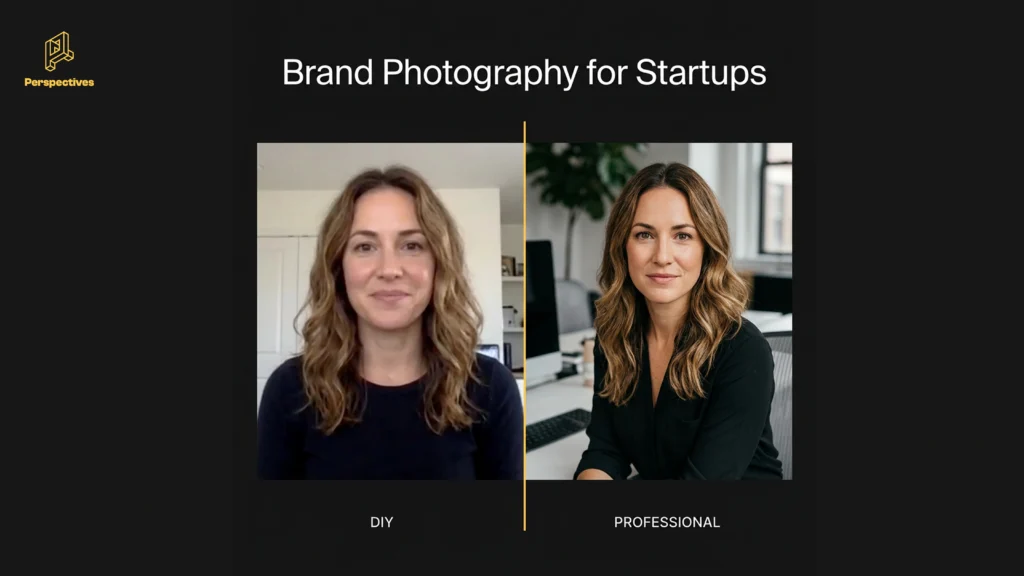
Do startups really need professional brand photography, or can phone photos work?
Phone photos work for casual social content. For anything building trust, a pitch deck, press kit, or LinkedIn presence, professional brand photography makes a visible difference, a point also supported by Meta’s own creative guidance for businesses.
How often should a startup refresh its brand photography?
Most startups get 6 to 12 months of use from one company photoshoot before needing a refresh, especially if the team grows or the product changes significantly.
Conclusion
Priya’s team eventually did the shoot three months after the funding announcement, rather than before. The images turned out great. They just missed the exact moment they would have mattered most. Brand photography isn’t about vanity. It’s about being ready when the attention arrives, and for most startups, that moment comes sooner than the shoot gets scheduled.
Key Takeaways
- Brand photography for a startup should cover the website, pitch deck, and LinkedIn in one coordinated effort.
- A single company photoshoot is more efficient than separate sessions for each use case.
- A founder photoshoot should include both formal and casual styles to work across decks and social media.
- Team and workspace shots signal real operations, not just an idea on a slide.
- Product shots from the same brand photoshoot can serve the website, social, and press at once.
- Planning the shot list around specific use cases prevents wasted sessions later.
- Waiting until after a funding round or launch to shoot means missing the moment it mattered most.
- Consistent lighting and styling across all images make a brand look established rather than scattered.
- One well-planned brand photoshoot can last a startup 6 to 12 months before needing a refresh.
Your company deserves to look as ready as your product is. Book a call with Perspectives and let’s find the right angle together.